Skip to content
Projectsbhutan-llm-national-llm-data-lakeResearch

Bhutan LLM : National LLM + Data Lake

The Bhutan Sovereign LLM Initiative, led by DHI InnoTech, aims to build a national AI layer for Bhutan, which is a secure, sovereign Large Language Model integrated with a structured National Data Lake. This platform will: Aggregate structured and unstructured national datasets. Serve as a sovereign knowledge engine trained on Bhutan-specific data. Power AI agents capable of policy analysis, institutional intelligence, and public-facing services. Act as a digital extension of Bhutan. It will be a responsible AI representation of the Kingdom for both domestic governance and international engagement. The initiative envisions Bhutan not merely as a consumer of global AI systems but as a creator of a nationally aligned intelligence layer, grounded in Bhutanese values, governance structures, and development priorities. The deployment architecture remains flexible: Phase 1 (Prototype): Agent-based architecture built on leading AI APIs. Phase 2 (Conditional on Funding): Migration to sovereign GPU infrastructure hosted within Bhutan. Alternative Path: Continued operation on secure global cloud infrastructure if capital expenditure is constrained. The system is being developed as modular, interoperable, and sovereign by design.

Bhutan LLM

Why this Matters Now

Artificial Intelligence is rapidly becoming national infrastructure, comparable to telecommunications or energy grids. Countries that do not establish sovereign AI capabilities risk:
Dependency on external AI systems for governance.
Loss of control over national data.
Limited participation in AI-driven economic transformation.

Small nations, in particular, face a strategic window: build sovereign systems early or become permanently reliant on external models.

Bhutan has the opportunity to:
Establish itself as a model AI-sovereign small nation.
Demonstrate ethical AI aligned with Gross National Happiness principles.
Build national AI capacity before regulatory and technological barriers increase.
This is not simply a technology project, it is digital statecraft.


Why Bhutan and Why InnoTech

Bhutan is uniquely positioned to build a sovereign AI platform due to:
Centralized governance enabling coordinated data integration.
A manageable national dataset scale suitable for structured AI deployment.
A policy environment open to innovation under responsible oversight.
A national development philosophy centered on long-term wellbeing.
DHI InnoTech provides:
Technical leadership focused on emerging technologies.
The agility of a technology innovation entity with state alignment.
The ability to bridge government systems, data infrastructure, and enterprise deployment.
Few small nations possess both strategic alignment and execution capability within a single ecosystem.


Investment Required/Project Cost:

Two deployment scenarios are under consideration:

Scenario A – Sovereign GPU Infrastructure
Estimated Capital Requirement: USD 500,000 – 1,000,000
This would fund:
High-performance GPU servers.
Secure hosting infrastructure.
Initial data lake architecture.
Local model training and fine-tuning capability.

This scenario ensures long-term sovereignty and reduced dependency on external AI providers.

Scenario B – Cloud-Based Prototype Scaling
Estimated Requirement: USD 12,000 in API credits (2026)
This would fund:
Continued development using frontier AI APIs.
Multi-agent experimentation.
Validation of use cases prior to hardware acquisition.

This approach de-risks the initiative before capital investment.


Partnerships and Collaboration

The initiative is structured as a public–innovation collaboration anchored at DHI InnoTech.

Planned ecosystem engagement includes:
Government agencies contributing structured datasets.
Technical collaborators supporting model architecture and evaluation.
GPU or cloud partners providing compute access.
Academic institutions supporting evaluation and domain expertise.
International AI organizations interested in sovereign AI pilots in small nations.

The system is being built using an AI agent framework to allow modular integration across ministries, enterprises, and national platforms.

This collaborative architecture reduces technical risk while accelerating deployment.


Want to collaborate on this project? Write the lead directly, or pitch an adjacent idea through the open queue.

More projects

All projects →
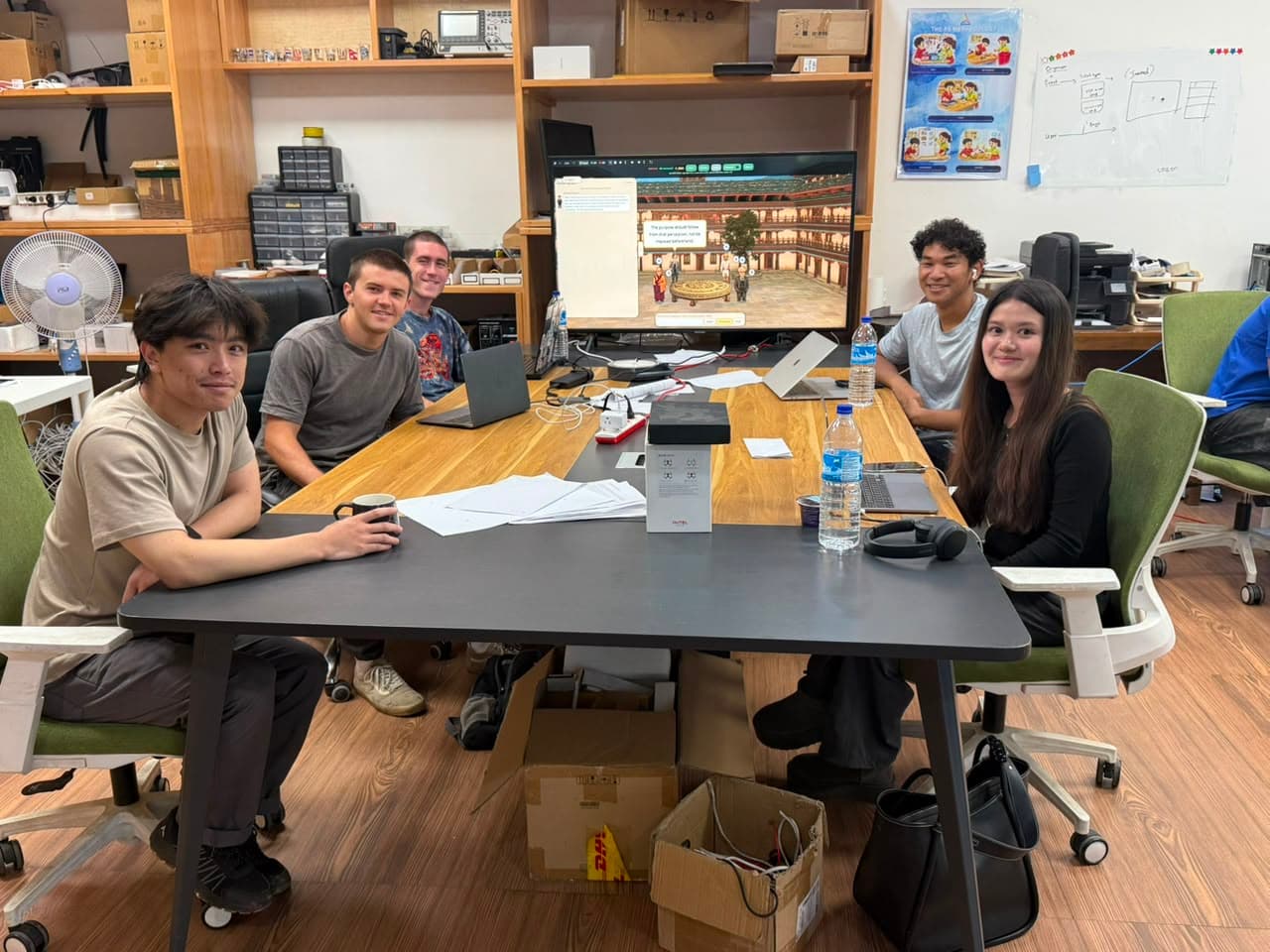
The working group
Research
AI / MLThimphu

Mindfulness App

To face modern challenges, many global considerations are centered around technology, artificial intelligence, mindfulness, wellbeing, and ethical living. In hopes of integrating Bhutanese wisdom into these conversations, InnoTech (DHI) is developing a GNH-inspired wellness and media application that will serve as a digital bridge between Bhutan’s rich traditions of mindfulness and contemplative science and the emerging technologies of artificial intelligence, personalized wellness, and human-centric digital design.

Read the case
RikhaNet
Deployed
JNWSFLNubi Gewog (Bhutan)

RiKhaNET: Realtime Integrated Knowledge on Habitat & Animals – Network

RiKhaNET addresses a core operational challenge in Bhutan’s tiger landscapes where field data and incident information are often fragmented across tools and stakeholders, limiting timely prevention. RiKhaNET consolidates these inputs into a single, governed platform by integrating Bhutan’s SMART (Spatial Monitoring and Reporting Tool) data with AI-driven analytics and real-time sensor inputs. Using machine-learning models, the system generates dynamic risk heatmaps, geofencing alerts, and automated notifications to help rangers and communities anticipate conflict hotspots before incidents occur, shifting response from reactive to proactive prevention. The Stakeholder meetings conducted emphasized that the pilot must be designed to strengthen trust and adoption, not only technology performance. Three design requirements were highlighted: Data governance and transparency: The current hosting arrangements raise concerns about filtering, access control, and sensitive wildlife-location data; governance must be explicit and communicated clearly. Community safety communication: The alert systems must be carefully designed so alerts support prevention and coordinated action rather than increasing fear; community focal persons can strengthen trusted communication. Operational realism for detection: It has been noted that tiger detections can be rare; deployments may run for months yet capture limited tiger events, so the pilot should prioritize focused hotspot monitoring with sufficient duration to produce meaningful training and pattern data.

Read the case
Field Site Deployment
Deployed
IoTThimphu, Semjong, Gyalpozhing

Smart Water Management System

An IoT-enabled Smart Water Management System designed to improve water distribution, reduce wastage, and ensure reliable access to safe drinking water. The system integrates smart sensors for water quality, pressure, and flow monitoring, supported by remote monitoring and control to detect anomalies and optimize water supply from source to end users. Currently being piloted in Bhutan, the solution has potential for regional and international scale-up.

Read the case