A gamified mindfulness ecosystem that transforms meditation into a living, evolving digital garden.
Why this Matters Now
Digital mental health adoption has accelerated globally. However, most meditation apps are impersonal, lack features that encourage consistency, and subtly push users to passively consume rather than actively practice mindfulness; they lack the skillful means to communicate these topics effectively.
The Mindfulness App bridges this gap by:
Embedding encouragement through gamification stylized through Bhutanese art and aesthetics
Integrating interactive AI agent conversation for a novel and interactive learning experience
Aligning spiritual practice with subtle progress systems
Creating culturally rooted yet modern mindfulness technology
As recognition of the importance of mental health grows worldwide and global perspectives meet and occasionally contradict, providing a digital sanctuary where meditative practice is encouraged and perspectives on contemplative practice can meet and be compared across traditions presents a timely opportunity.
Why Bhutan, Why Pema Mindfulness and Why InnoTech
Bhutan’s modernizing of traditional wisdom through the national philosophy of Gross National Happiness provides a unique positioning advantage in the global mindfulness market. Combined with cutting-edge AI expertise, philosophy meets technology.
DHI InnoTech possesses:
Diverse Team with across-the-board expertise
Product engineering experiences
A mission-driven ecosystem aligned with national wellbeing goals
Pema Mindfulness possesses:
Startup experience with cutting-edge AI applications
Global perspective on mindfulness education and communication
Research-based and ethically grounded approach to technological development
Few can authentically combine spiritual heritage with modern AI know-how at scale; this collaboration aims to do just this.
Investment Required/Project Cost
Estimated 12-month pilot development and deployment cost of USD 100,000 – 400,000, covering:
Production-level UX refinement and global app store deployment
AI agent personality and conversation refinement and behavioral data modeling
Security, compliance, and privacy certification
Market launch and structured pilot programs
Investment size will scale depending on deployment scope (Bhutan-only vs. regional expansion).
Partnerships and Collaboration
Future collaborations may include:
• Universities for AI agent personality research and behavioral research validation
• Wellness institutions for structured cohort testing
• Enterprise partners for corporate mental wellness deployment
• Impact investors focused on digital wellbeing and conscious technology
To address modern challenges, combining technology, artificial intelligence, mindfulness, wellbeing, and ethical living is a pertinent global consideration. To integrate Bhutanese wisdom into these conversations, InnoTech (DHI) is collaborating with an MIT mindfulness startup to create a compelling way to convey mindfulness wisdom. With GNH-inspired approaches to modern wellbeing, this app aims to bridge Bhutan’s rich traditions of mindfulness and contemplative science with emerging technologies in artificial intelligence, personalized wellness, and human-centric digital design.
Want to collaborate on this project? Write the lead directly, or pitch an adjacent idea through the open queue.
The Bhutan Sovereign LLM Initiative, led by DHI InnoTech, aims to build a national AI layer for Bhutan, which is a secure, sovereign Large Language Model integrated with a structured National Data Lake. This platform will:
Aggregate structured and unstructured national datasets.
Serve as a sovereign knowledge engine trained on Bhutan-specific data.
Power AI agents capable of policy analysis, institutional intelligence, and public-facing services.
Act as a digital extension of Bhutan. It will be a responsible AI representation of the Kingdom for both domestic governance and international engagement.
The initiative envisions Bhutan not merely as a consumer of global AI systems but as a creator of a nationally aligned intelligence layer, grounded in Bhutanese values, governance structures, and development priorities.
The deployment architecture remains flexible:
Phase 1 (Prototype): Agent-based architecture built on leading AI APIs.
Phase 2 (Conditional on Funding): Migration to sovereign GPU infrastructure hosted within Bhutan.
Alternative Path: Continued operation on secure global cloud infrastructure if capital expenditure is constrained. The system is being developed as modular, interoperable, and sovereign by design.
A mini ‘Fab Lab’ platform that equips Bhutanese schools with digital fabrication tools, teacher training, and ongoing technical support to drive hands-on STEAM learning and student-led innovation.
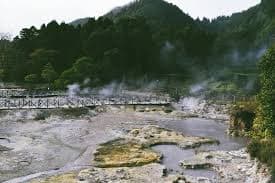
The proposed geothermal program is a multi-phase initiative led by Druk Holding and Investments (DHI) to unlock Bhutan’s geothermal potential across multiple Dzongkhags such as Gasa, Punakha, and Gelephu:
Electricity Generation – Deploy small-scale electricity generation providing baseload renewable power to the grid.